
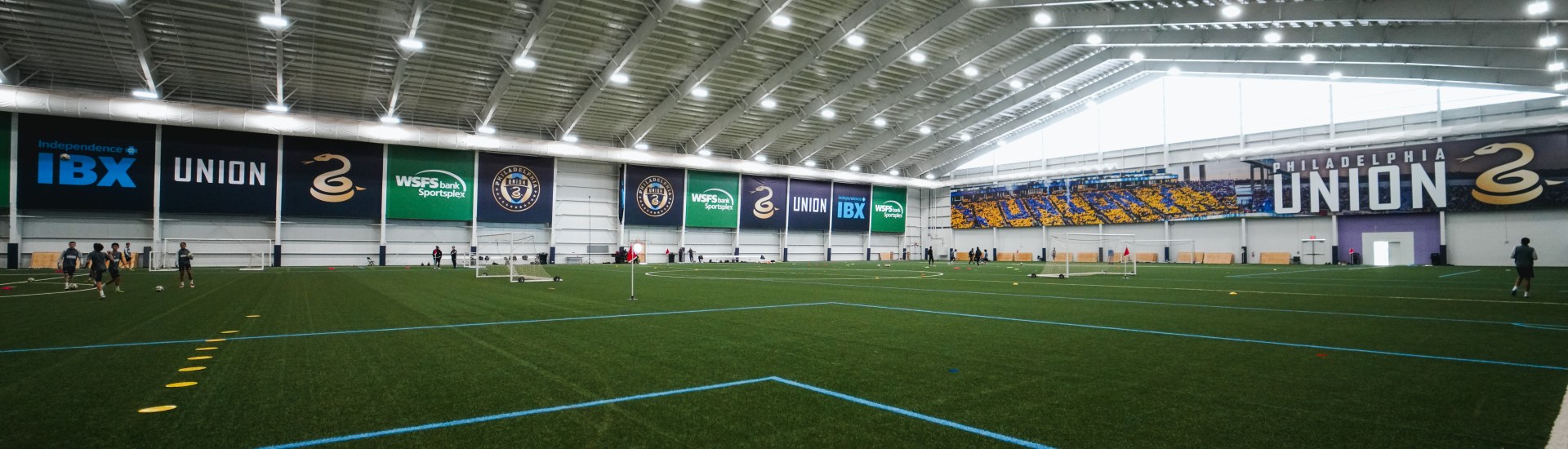
When the outdoor soccer season wraps up, a lot of young players put their cleats away and wait for next spring. That break can feel earned after a long fall of games and tournaments, but it can also be one of the biggest missed opportunities in a player’s development. The months between seasons are exactly when indoor soccer training can do the most good, sharpening the skills that get rushed or overlooked once the outdoor schedule picks back up.
The Off-Season Is a Development Window
Youth soccer moves in cycles; fall season ends, winter arrives, and then spring tryouts and games start again before anyone has had much time to work on individual weaknesses. Coaches and trainers who work with young players see the same pattern every year. Skills that were rough in October are still rough in March. Unless training has happened between October and March, players’ weaknesses stay the same. Indoor soccer training eliminates that problem.
During the off-season, players still get consistent reps on their footwork, first touch, and game awareness, all while their bodies also get a break from the pounding of a full outdoor schedule. It turns an otherwise quiet stretch of the calendar into real development time.
Why the Indoor Game Builds Better Players
Indoor soccer training near me searches spike every winter for good reason. The format itself does a lot of the coaching work.
Tighter spaces force faster decisions
On a smaller surface, players do not have the luxury of a few unpressured touches before deciding what to do with the ball. Indoor play demands quick reads and quicker execution, which trains the brain as much as the feet.
More touches equals more repetition and more chances to improve.
On a full-sized outdoor field, players can go several minutes without touching the ball. Since the indoor space is smaller, everyone stays involved. It creates more opportunities to practice ball control, quick passing, and 1v1 moves.
Boards change the habits players form
Many indoor formats use boards instead of open sidelines, which keeps the ball alive and teaches players to think about angles, spacing, and recovery runs in a way that carries over well once they are back on grass.
Consistency keeps players building
Weather doesn’t cancel an indoor session. A facility that doesn’t have to close because of weather allows training to stay on schedule, and players to continue building.
What This Looks Like at WSFS Bank Sportsplex
Indoor programming at WSFS Bank Sportsplex is built around this exact idea: use the off-season to keep players developing and protect the progress they made all fall. A few of the ways youth players stay sharp indoors through the colder months include:
Futsal Academy
Futsal is widely regarded as one of the best tools available for building technical ability in young players. The smaller ball, tighter space, and constant pressure sharpen close control. This forces the player to make decisions quickly. This translates to the player being comfortable under pressure in a way that translates directly back to the outdoor game.
PDP Clinics
Player development clinics give athletes focused, position-relevant training in a structured indoor environment, led by coaches connected to the Philadelphia Union’s methodology.
Winter Select
For players looking for a higher level of competitive indoor play through the winter months, select opportunities keep game experience going even when outdoor leagues are on pause.
The Performance Lab
Skill work is only part of the picture. Pairing indoor soccer training with structured strength, speed, and agility work in the Performance Lab helps players show up to spring tryouts faster, stronger, and less prone to the overuse injuries that come from an unbalanced training year.
Together, these programs let a player rest their outdoor legs while still sharpening their game, on a schedule built around a Delaware County winter.
Skills That Carry Over to the Outdoor Season
Parents and coaches sometimes wonder whether indoor training actually helps once players are back outside on a full-sized field. The short answer is yes, and the reasons are fairly straightforward.
The quick decision-making built indoors does not disappear once the field gets bigger. If anything, it becomes an advantage. A player who is used to deciding a half-second of space finds that the extra room on an outdoor field feels like a gift. Close control developed in tight quarters holds up under outdoor pressure too, since defenders on grass still close space quickly during real match moments.
The tight space and constant pressure of indoor play force players to start, stop, and change direction almost every few seconds. This is far more often than they would on a wide-open outdoor field. This gives the player another physical benefit. Repeating those bursts over and over builds quicker first steps and sharper change of direction, the same qualities that let a winger blow past a defender or an attacker separate from a marker in open space outdoors.
Setting Up a Strong Spring
Oftentimes, when players train through the winter, they head into spring tryouts sharper and quicker. Their body is already in game shape. Indoor soccer keeps them developing during the months when they might otherwise lose momentum.
For families searching for indoor soccer training near me this winter, WSFS Bank Sportsplex offers a full slate of programming built to keep young players developing all year long, from Futsal Academy and PDP clinics to Winter Select and the Performance Lab. Learn more about upcoming programs and registration at WSFS Bank Sportsplex.
Leave a Reply